PlayTogether: Bringing the game night back home.
Designing a social gaming hub where chatting & video presence are the whole point for 112M people, not an afterthought.
The Project
This project was completed as part of a course at Indiana University. I was a core contributor across the full design lifecycle. This case study showcases my contribution to the project.
Friends scatter. Schedules fill up. What used to be a weekly game night around someone's kitchen table turns into a Discord server with three bots, a Zoom call, and someone sharing their screen.
PlayTogether is a unified platform I helped design that puts togetherness first, integrated group chat, 1:1 private messaging, and real-time video/audio built directly into the game. No tab-switching. No setup fatigue. Just click and play.
Timeline
6 weeks
Methods
Interviews, Prototyping, Expert Evaluation
My Responsibility
Persona Development, Ideation & Concept Selection, Expert Evaluation Synthesis, User Interviews, Affinity Mapping, Think-Aloud Evaluation, Internal Walk-through, Journey Mapping, Storyboarding, Interaction Design, Prototyping
Tools
Figma Design, FigJam, Figma Make, Procreate, Microsoft Suite
TL;DR
Problem & Solution at a glance
THE PROBLEM
Online game nights feel nothing like being in the same room.
Players juggle Discord, Zoom, and the game client simultaneously
No facial expressions, laughter, or side talk; play feels mechanical
Setup friction means sessions often never happen at all
No private channel to whisper strategy without leaving the game
THE SOLUTION
One unified space where chatting and video are the whole point.
Group chat always visible: Conversation never leaves the game screen
1:1 private messaging: DM any player without switching apps
Live video tiles + audio: See faces, hear laughter, feel the room
Team Huddle: Private audio bubble to strategize mid-game
DESIGN PRINCIPLE
Chatting and audio/video aren’t features. They’re the product.
THE THREE FEATURES THAT MAKE IT WORK
Group Chat + 1:1 DMs
Always-visible chat panel. Private message any player mid-game without leaving.
Live Audio & Video
Faces visible in tiles throughout play. Hear laughter, gasps, reactions in real time.
Team Huddle
Private audio bubble, whisper strategy to a teammate without anyone else hearing.
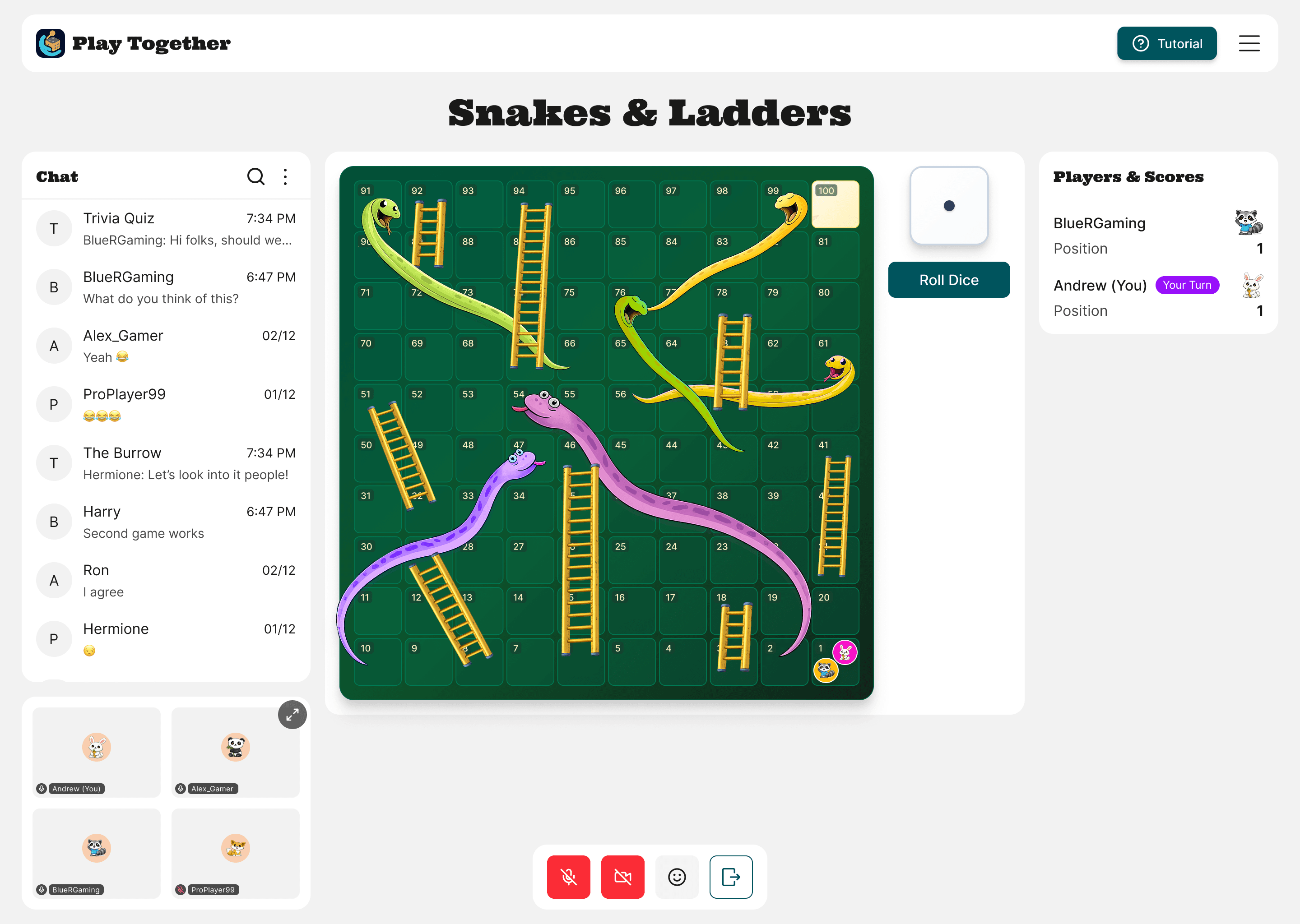
Final Prototype: Snakes & Ladders Game View
1
The Problem
Geographic distance and packed schedules don’t just prevent game nights, they erode the small rituals that hold friendships together. And the tools built to help? They make it worse.
“By the time everyone’s connected across Discord, Zoom, and the game client, half the group is distracted and the mood’s already gone.”
— Composite of interview participants
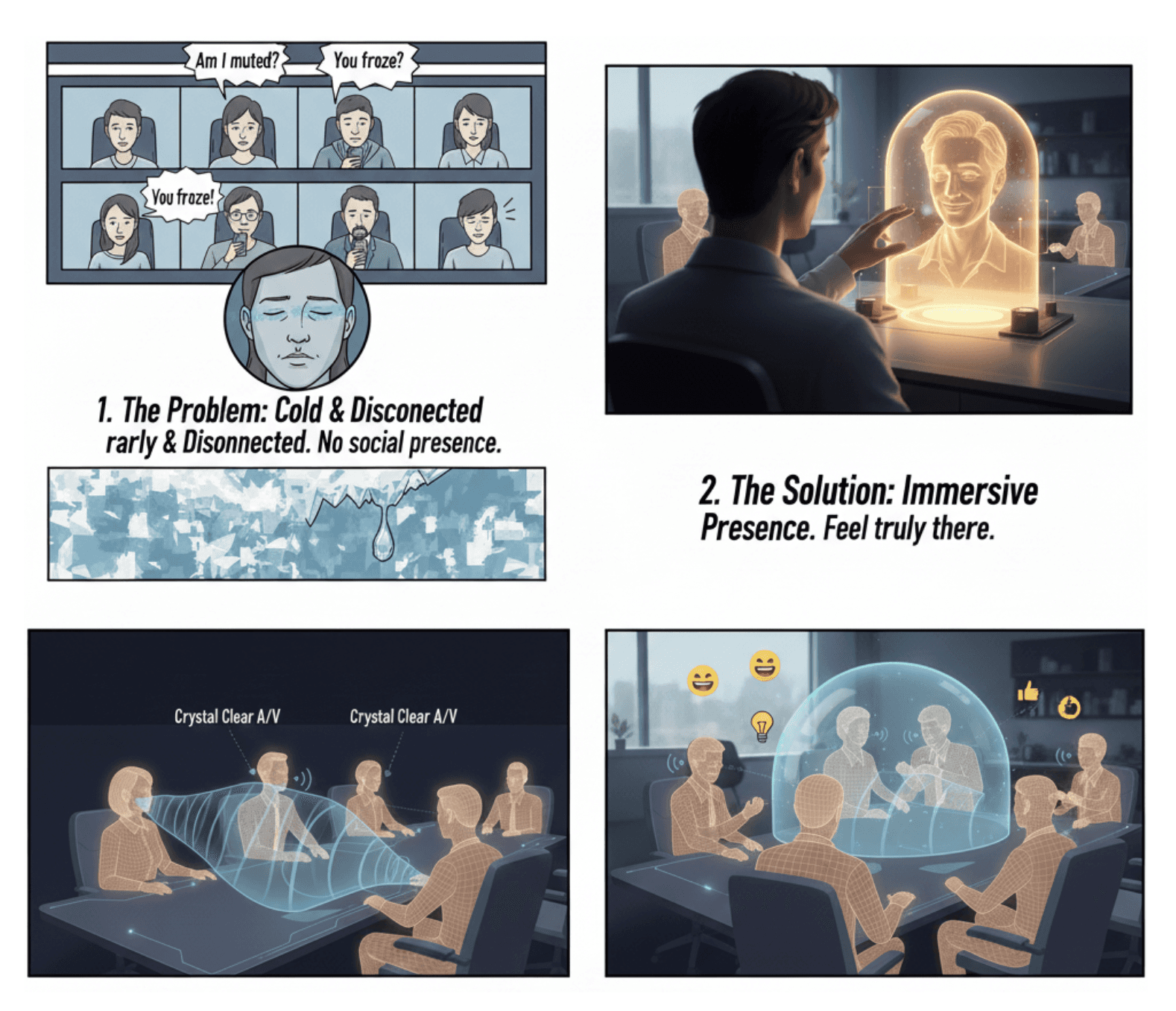
The root issue wasn’t the games themselves it was the fragmentation of the social layer. Chatting happened on one app, voice on another, the game on a third. The result: a mechanical, cold experience that felt nothing like sitting around a table together.
Tool Fragmentation
Discord + Steam + game platform + scheduling thread. Every added app is another chance to lose someone.
Emotional Coldness
No laughter, no side-talk, no reading faces. Online play felt like "solving a puzzle" rather than hanging out.
Weak Social Presence
Without non-verbal cues, a nudge, a glance, a whisper, players multitask or drop off quietly.
Coordination Friction
Scheduling across time zones and busy lives without built-in tools meant many sessions just… never happened.
Design challenge: How do we make online game nights feel as warm, spontaneous, and connected as in-person ones, without asking users to juggle five apps?
2
Research & Discovery
I contributed to both primary research and synthesis. I conducted interviews, contributed to the affinity map, and synthesized insights into personas and journey maps that drove our design requirements. We interviewed 7 young adults across varied gaming backgrounds, from experienced players to newcomers, and ran a secondary analysis of platforms like Board Game Arena, Tabletop Simulator, and Jackbox.
112M
Americans play games online with others, roughly 1 in 3 of the population
$30B
Projected global board game market by 2028, demand isn't shrinking
40%
Of full-time employees now work fully remote or hybrid, distance is the new default
Who We Designed For

Rose Mitchell
25, Female | Marketing Coordinator | San Diego, CA
"I just want game nights to feel fun and social again, not like I'm juggling five different apps."
Goals & Motivations
Stay connected with long-distance friends. Rose recently moved states for work, so online game nights are her main way to keep in touch.
Have seamless, low-effort game sessions. She doesn't want to troubleshoot audio, switch apps, or handle complicated digital setups.
Recreate the warmth of in-person play. She loves laughter, quick reactions, shared wins, and the organic flow of real table play.
Values & Work Methods
Prefers clarity and simplicity. Gets overwhelmed when digital spaces feel cluttered or technical.
Social, expressive, relationship oriented. Values communication and emotional presence over complex mechanics.
Organized but busy. Likes tools that handle logistics for her, scheduling, quick setup, and easy invites.
Characteristics
Uses Discord, Steam, and Tabletop Simulator but dislikes switching between them.
Plays board games 2–3 times a week, mixing light party games and longer collaborative strategy games.
Often plays with friends in different states; wants a unified platform where chat, gameplay, and setup all happen together.

Daniel Reyes
27, Male | Graduate Teaching Assistant & Part-Time Barista | Seattle, WA
"If the game night feels clunky or disconnected, people lose interest fast. I just want everyone to have a smooth, social experience."
Goals & Motivations
Keep weekly game nights consistent despite busy schedules. Daniel manages two part-time roles and evening classes, so predictable and easy online meetups matter.
Minimize technical friction. Dislikes setups with too many moving parts; wants a platform that handles rules, turns, and communication in one place.
Create a welcoming environment for mixed-skill groups. His friend circle includes gamers and non-gamers; wants tools that help newcomers feel included without long rule explanations.
Values & Work Methods
Efficiency and structure. Likes interfaces that are clean, guided, and reduce confusion for everyone.
Inclusive social dynamics. Values features that help quieter players stay engaged, prompts, visual cues, shared focus indicators.
Time management. Punctual; prefers activities that fit cleanly into a 60–90 minute window without overtime caused by setup issues.
Characteristics
Uses Zoom or Discord for voice but finds switching between windows distracting. Wants gameplay and communication tightly integrated.
Prefers cooperative or team-based board games because they help reduce competitive pressure and build connection.
Relies on visual cues since he often multitasks between teaching prep and leisure; appreciates highlights, turn indicators, and simplified UI flows.
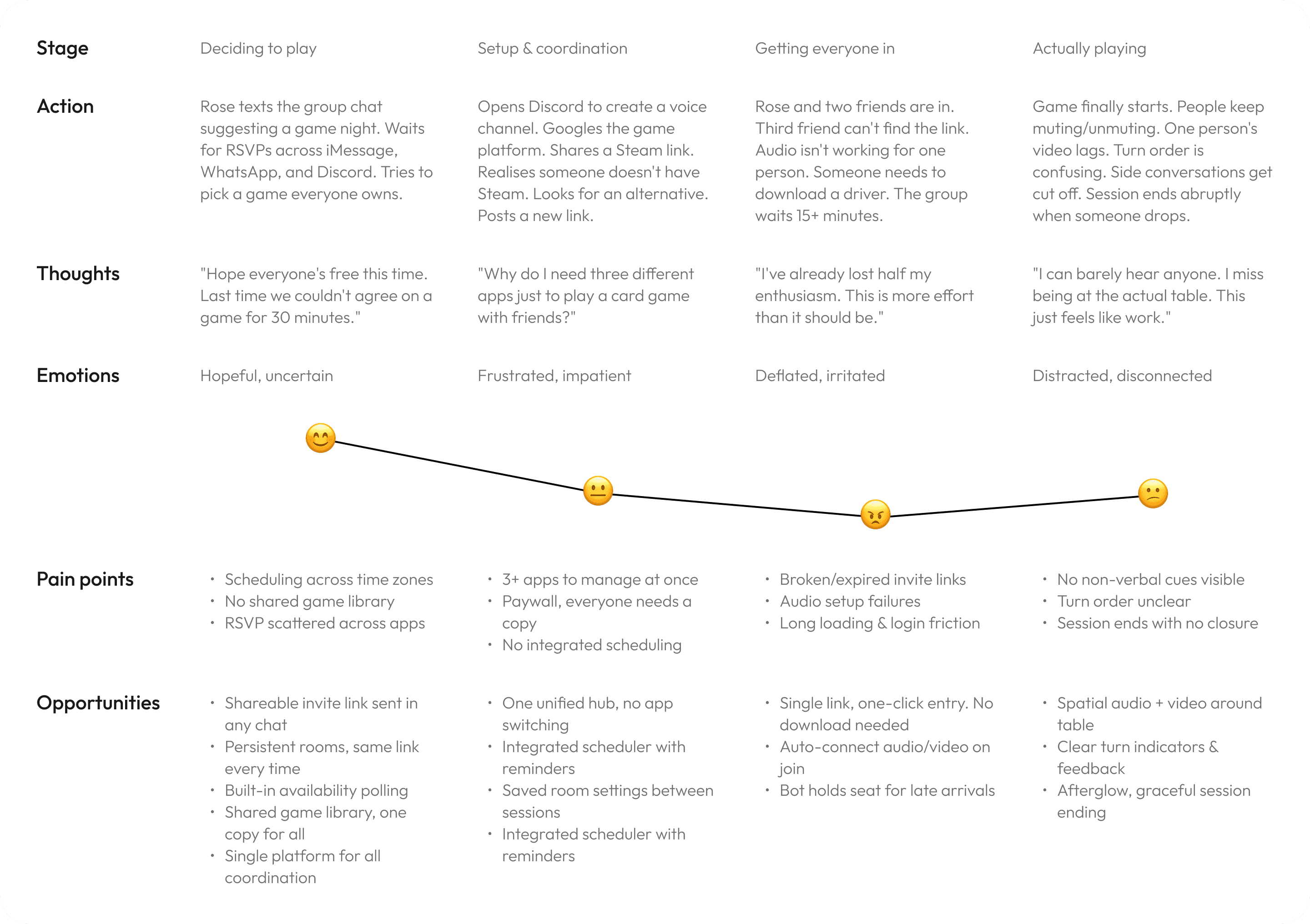
JOURNEY MAP: ROSE MITCHELL
Scenario: Rose tries to organize a casual online game night with friends using her existing tools, Discord, Steam, and messaging apps
What We Heard
1
Finding
In-person energy is irreplaceable, so replicate the signals.
Every participant described in-person play as "chaotic," "hilarious," and full of side-talk. Online felt colder, more mechanical. The missing ingredient: real-time non-verbal cues, facial expressions, laughter, a nudge.
2
Finding
Tool fragmentation is the #1 killer of game nights.
Participants described juggling Discord for voice, Steam for games, a scheduling thread for coordination. By setup time, half the group had already lost interest. The solution had to be one unified place.
3
Finding
Communication tools matter more than game mechanics.
"How people talk, react, coordinate, and share moments affects fun more than the game itself." Every interview confirmed: if the social layer breaks down, the game doesn't matter.
4
Finding
People want to drop in, not commit to a perfect setup.
Participants wanted flexibility, joining late, stepping away, still being included. Rigid game flows punished casual participation. Drop-in/out mechanics were essential.
3
Design Process
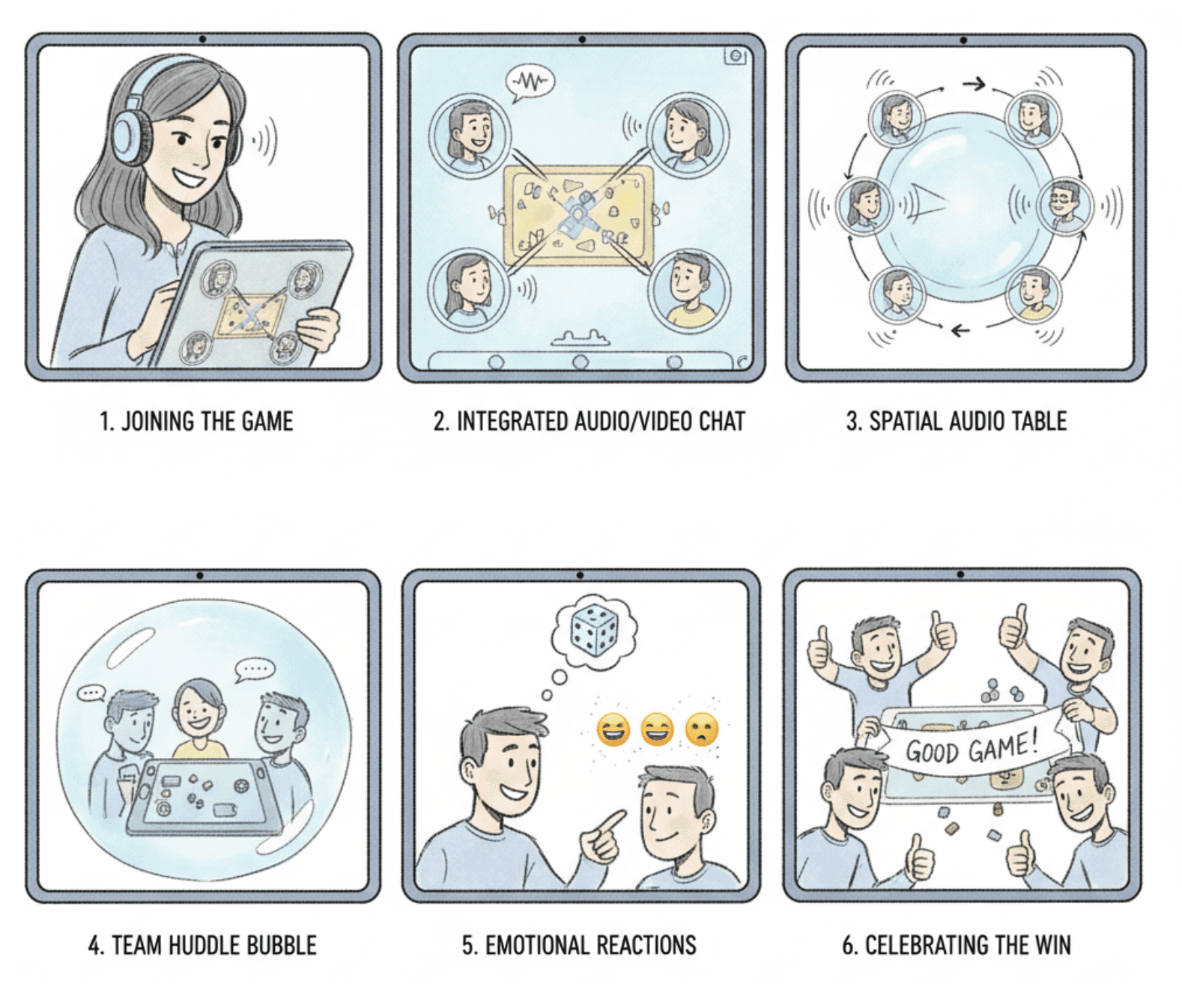
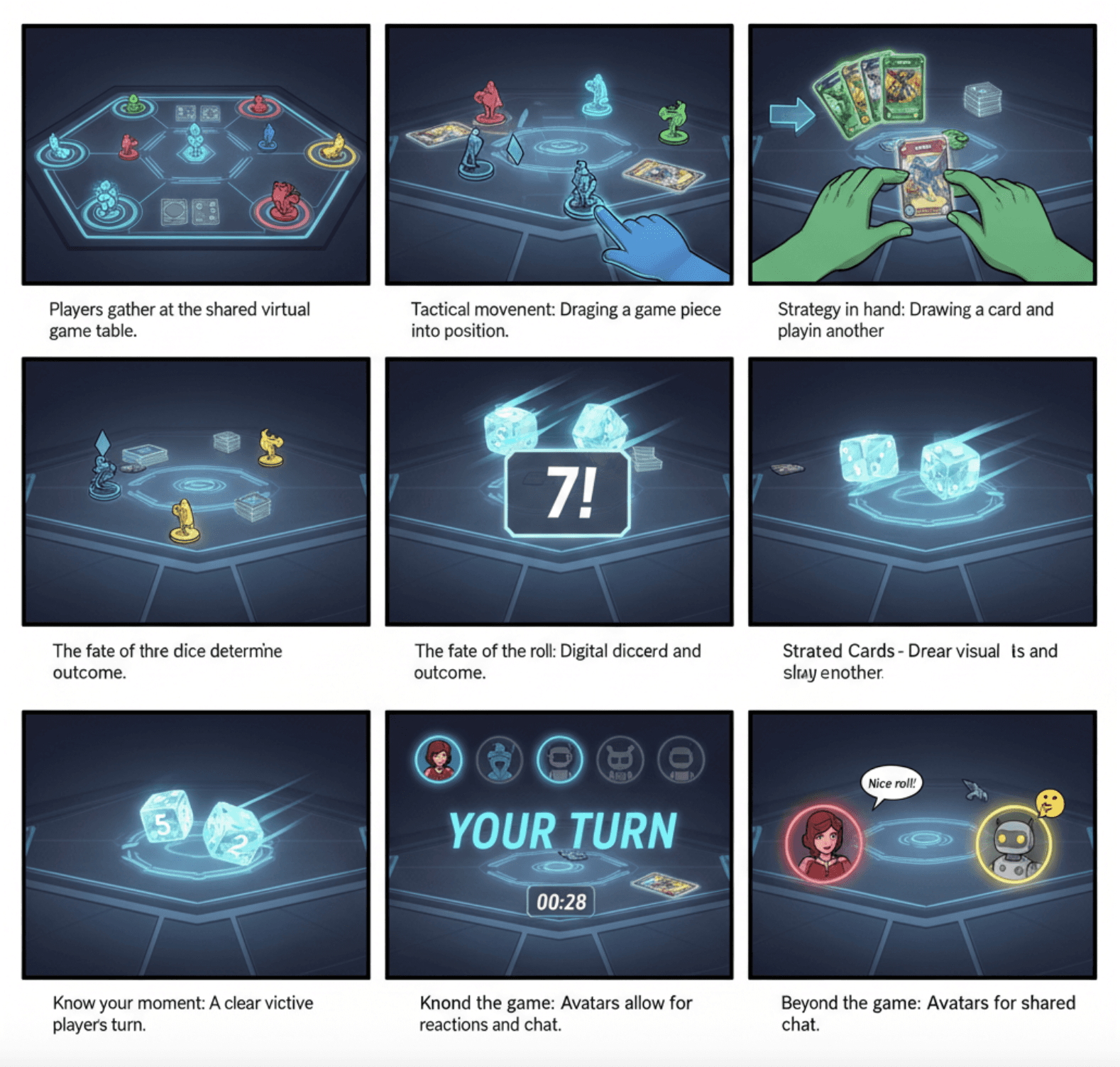
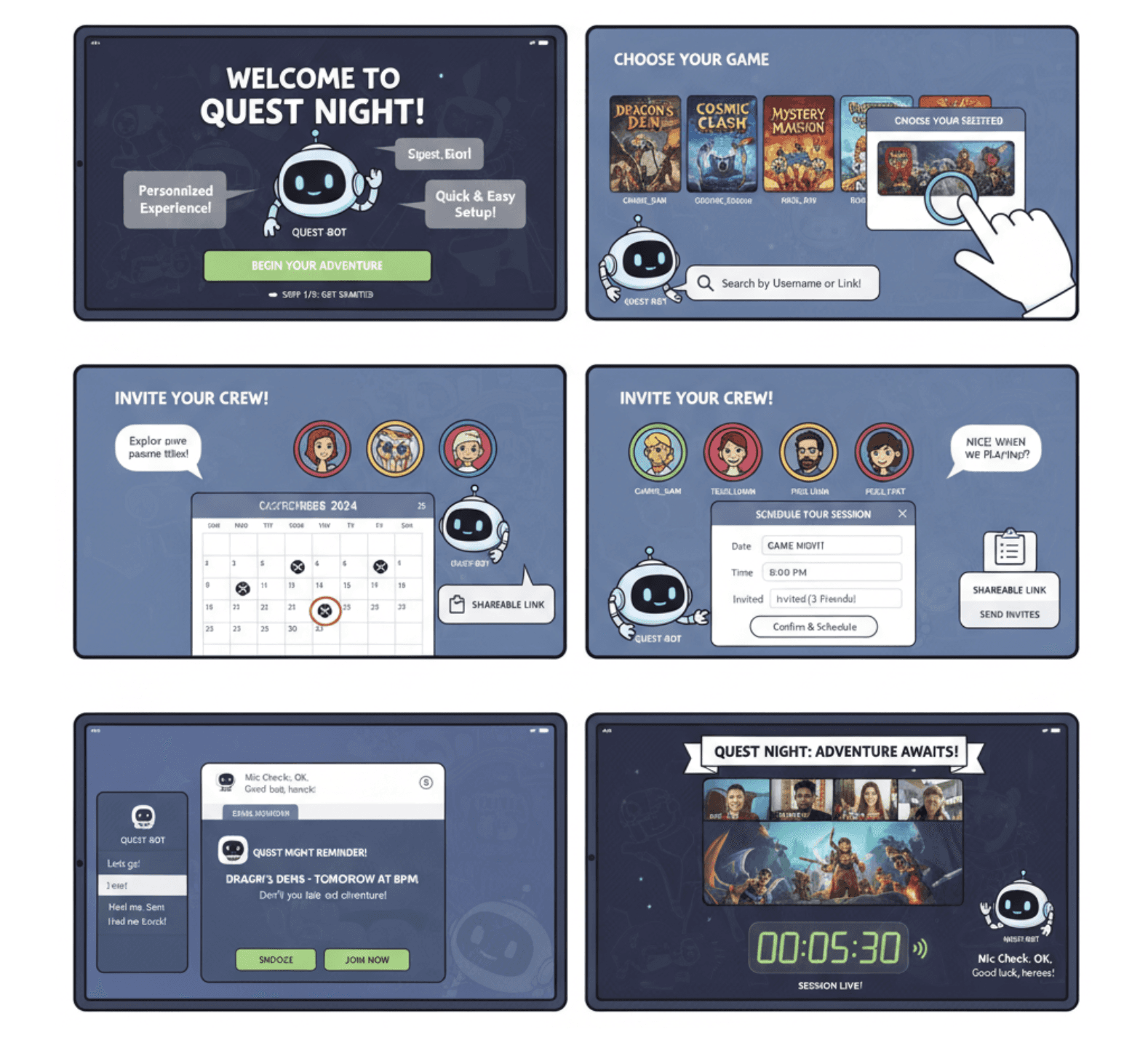
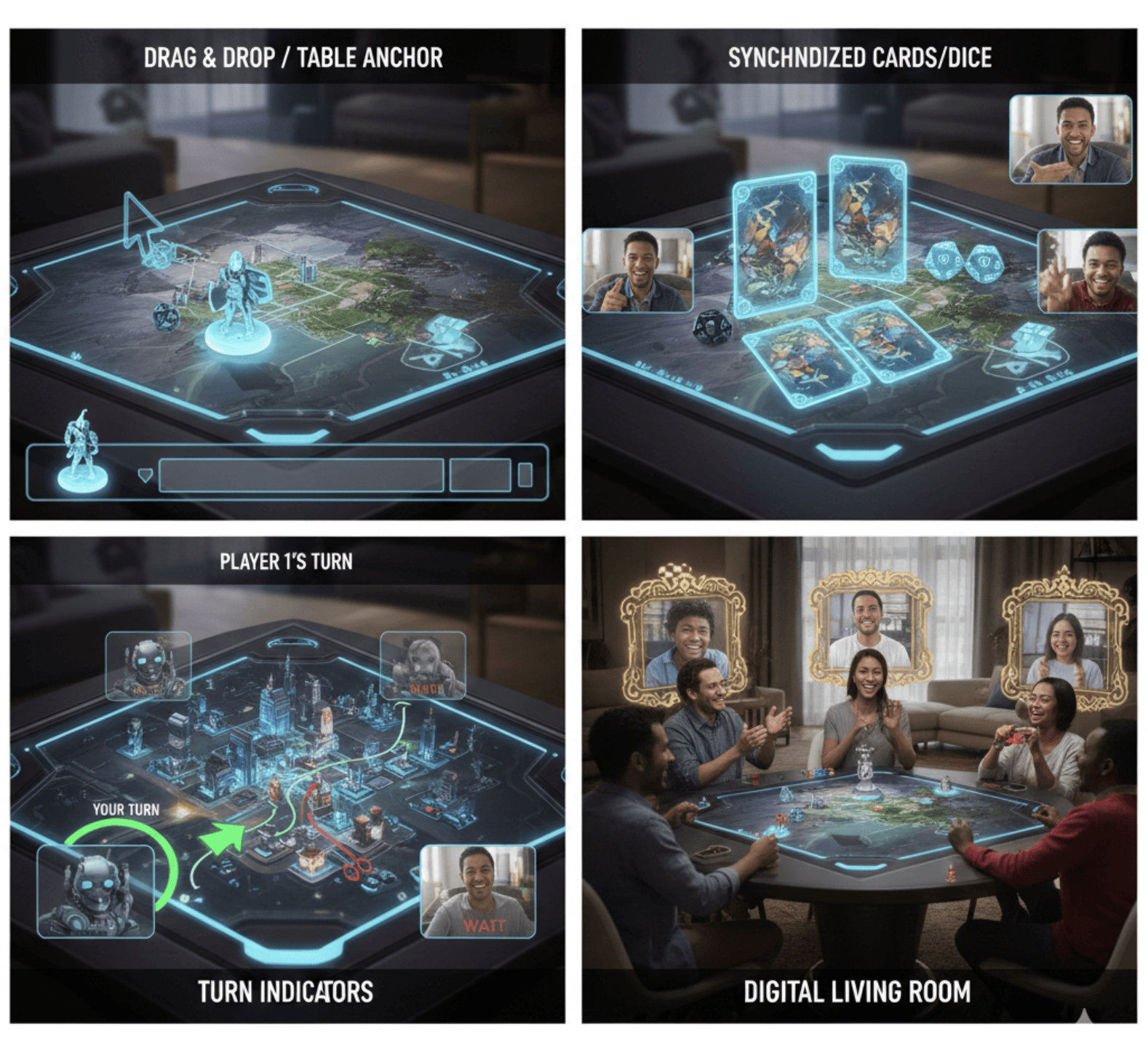
We moved from 60+ raw ideas through two contrasting system concepts, then converged on a hybrid that combined their strengths. I led sketching for the emotional flow storyboard and contributed to the mid-fidelity Figma prototype. Here’s how it unfolded.
Concept
A
Communication-First Hub
Built-in voice, video, spatial audio, and private "huddle" bubbles. Games as backdrop for conversation. Strong on warmth; lighter on structure and onboarding.
Social Virtual Game Table
Concept
B
Structured 3D table, drag-and-drop pieces, live tutorials, bots, and a built-in scheduler. Strong on clarity; risked making the board the focus over the people.
Concept
C
Combined both. Social warmth from Concept A (integrated video, audio, group chat, 1:1 private messaging) with structure from Concept B (turn indicators, tutorials, scheduling). One click in. Everything in one place.
Storyboards
Emotional & Social Flow Storyboard (Joining → Celebrating)
Holographic / Futuristic Tabletop Interaction Storyboard
Quest Bot Onboarding & Scheduling Storyboard
Ultimate Digital Tabletop Experience
Problem–Solution Narrative Storyboard
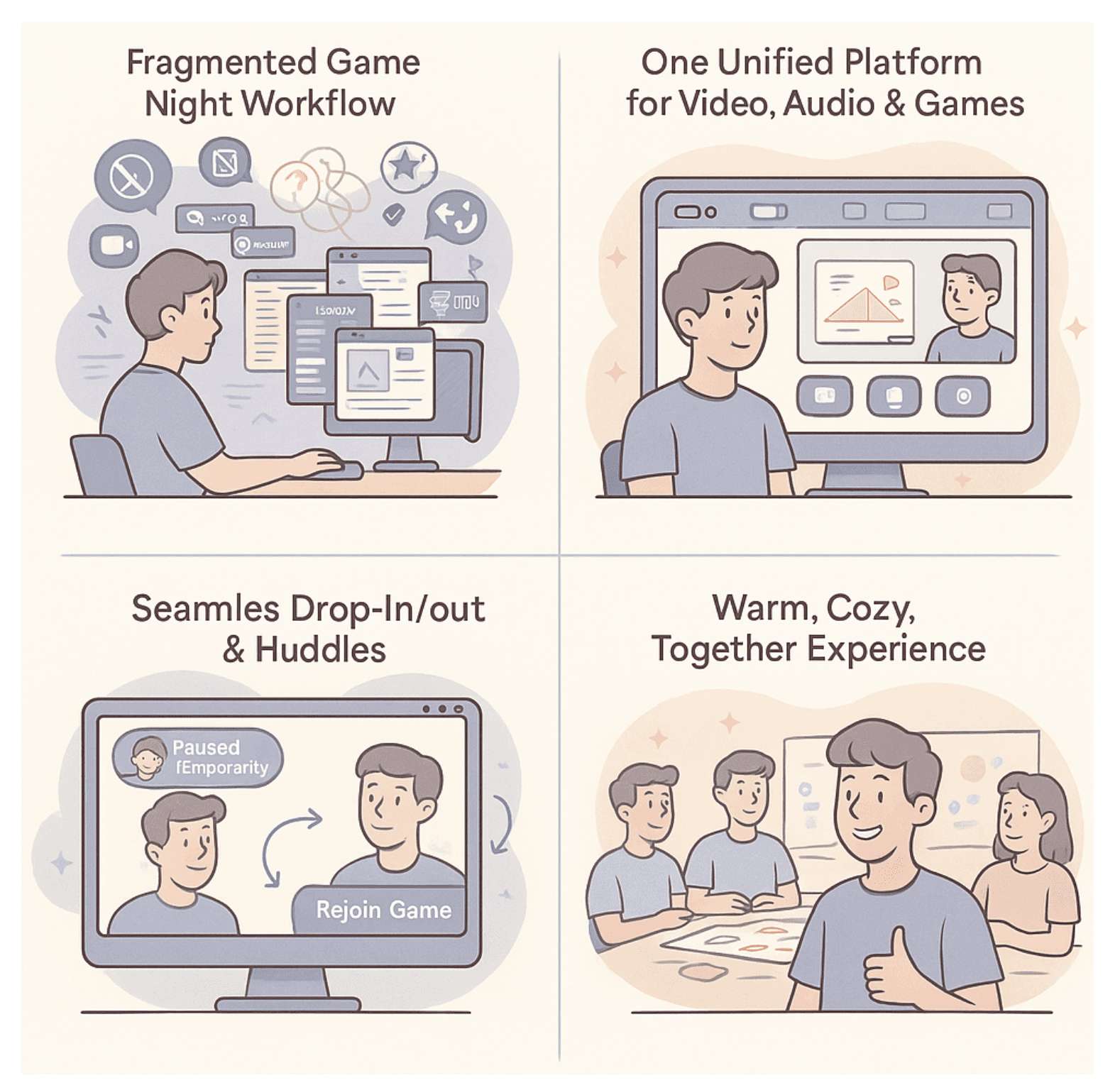
Fragmented vs Unified Workflow Storyboard
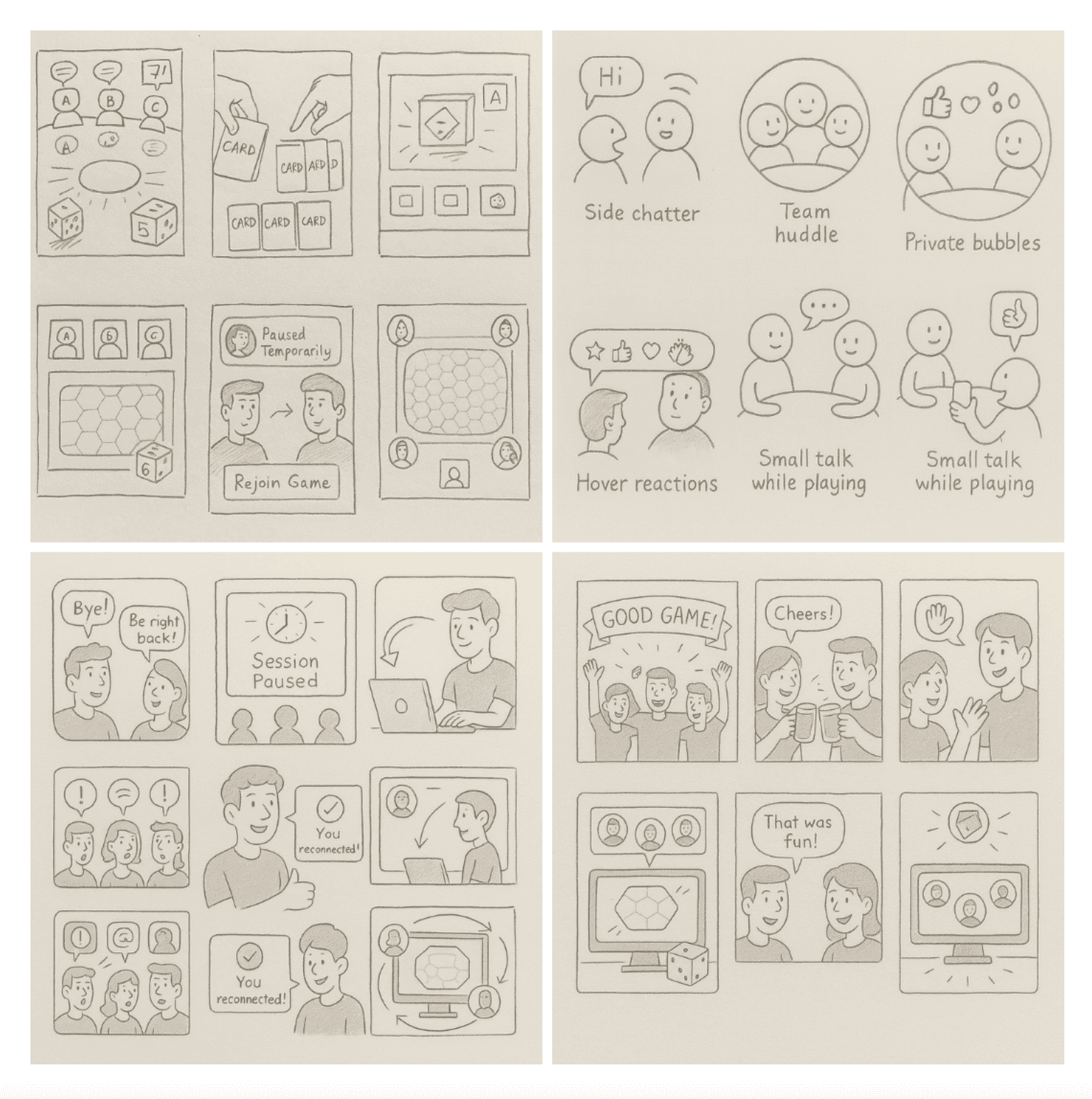
Paper Prototypes
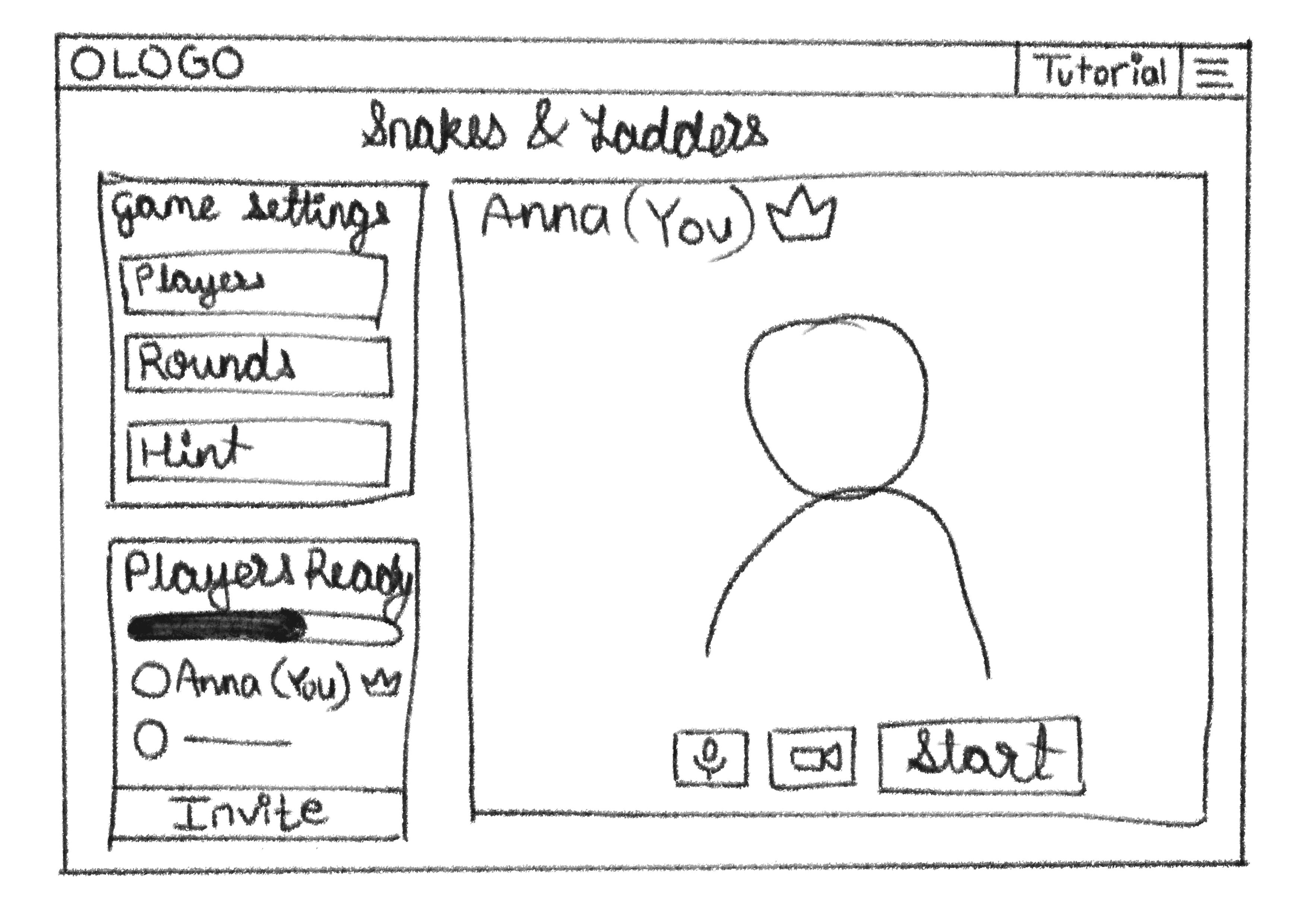
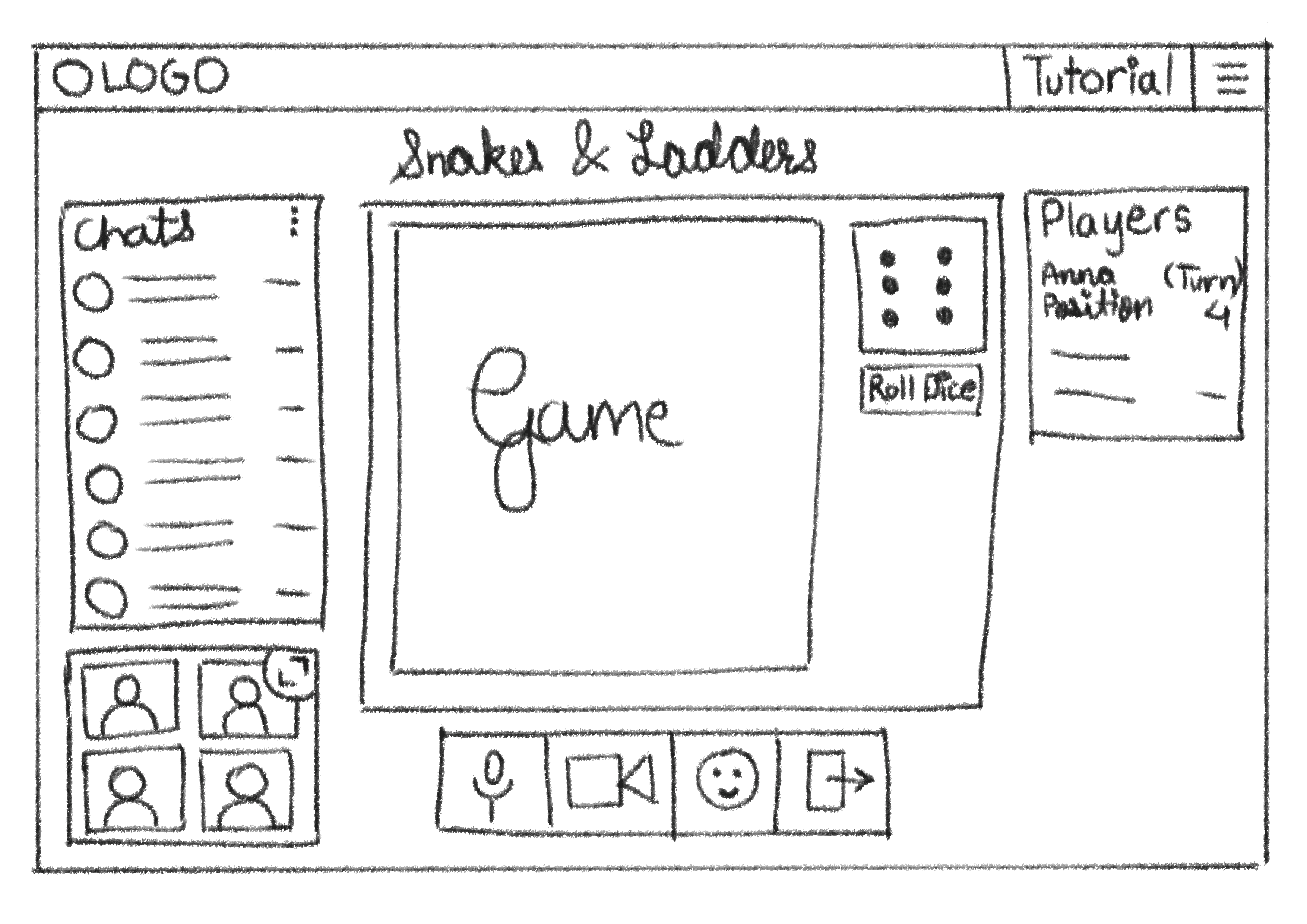
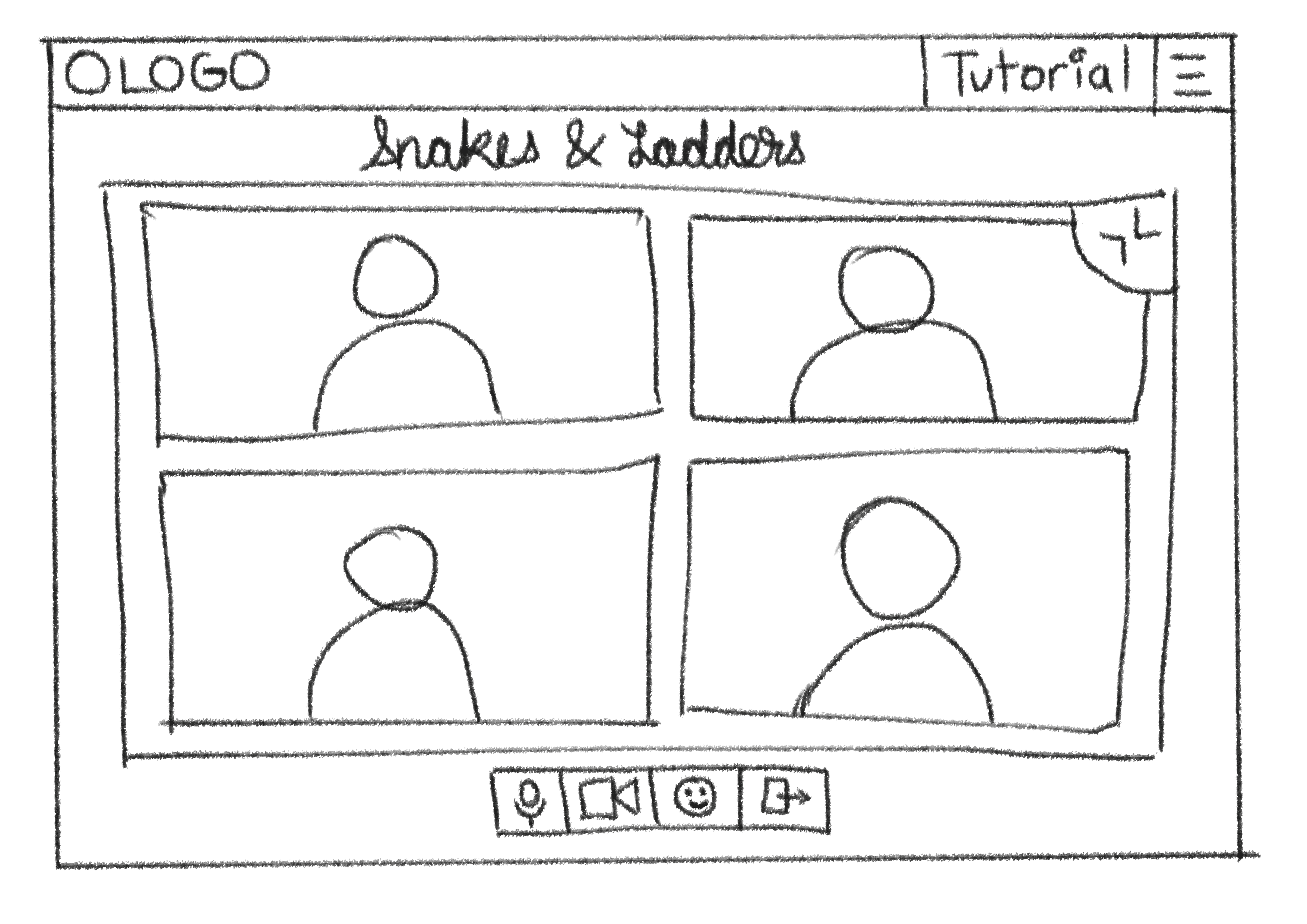
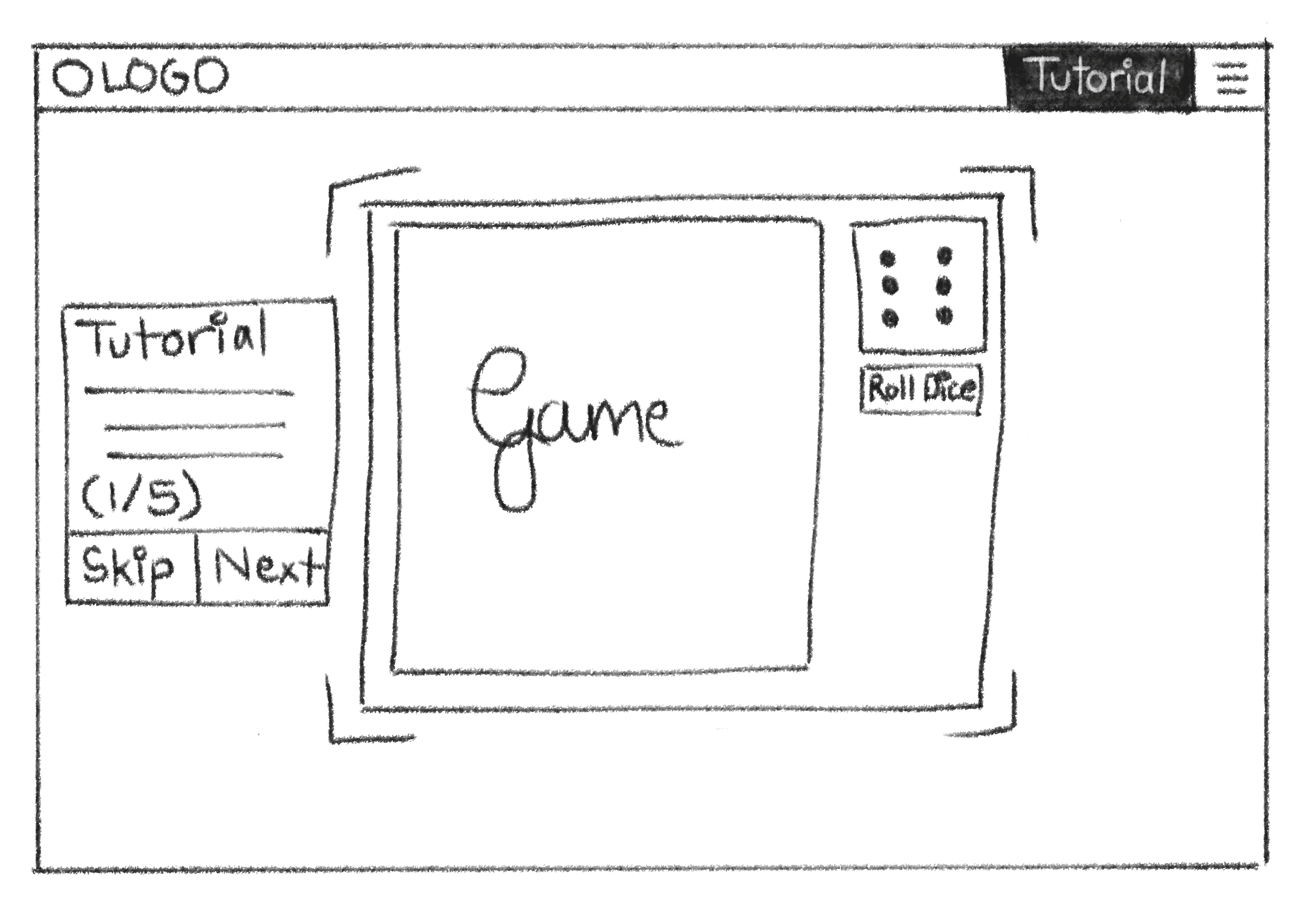
Mid-Fi Prototype
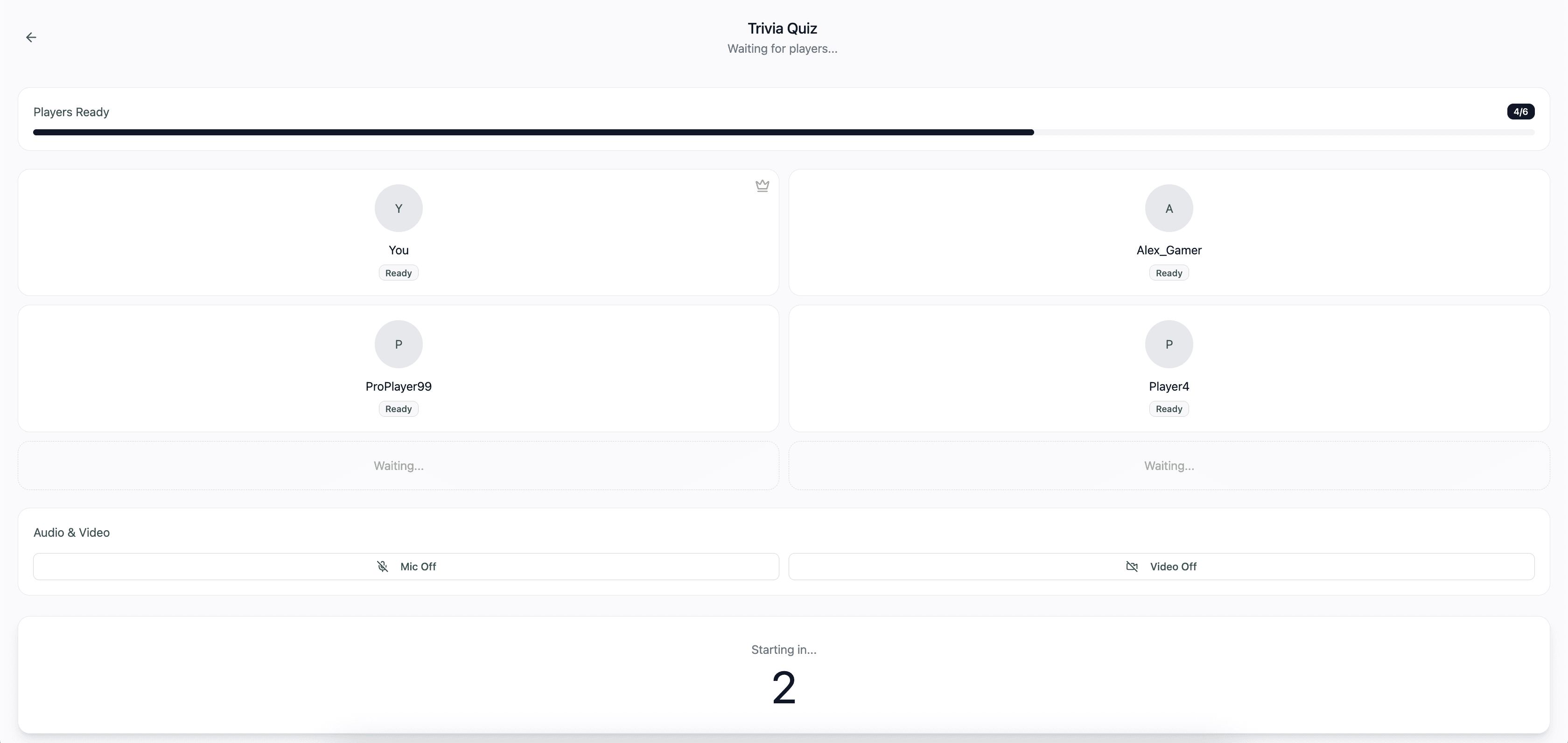
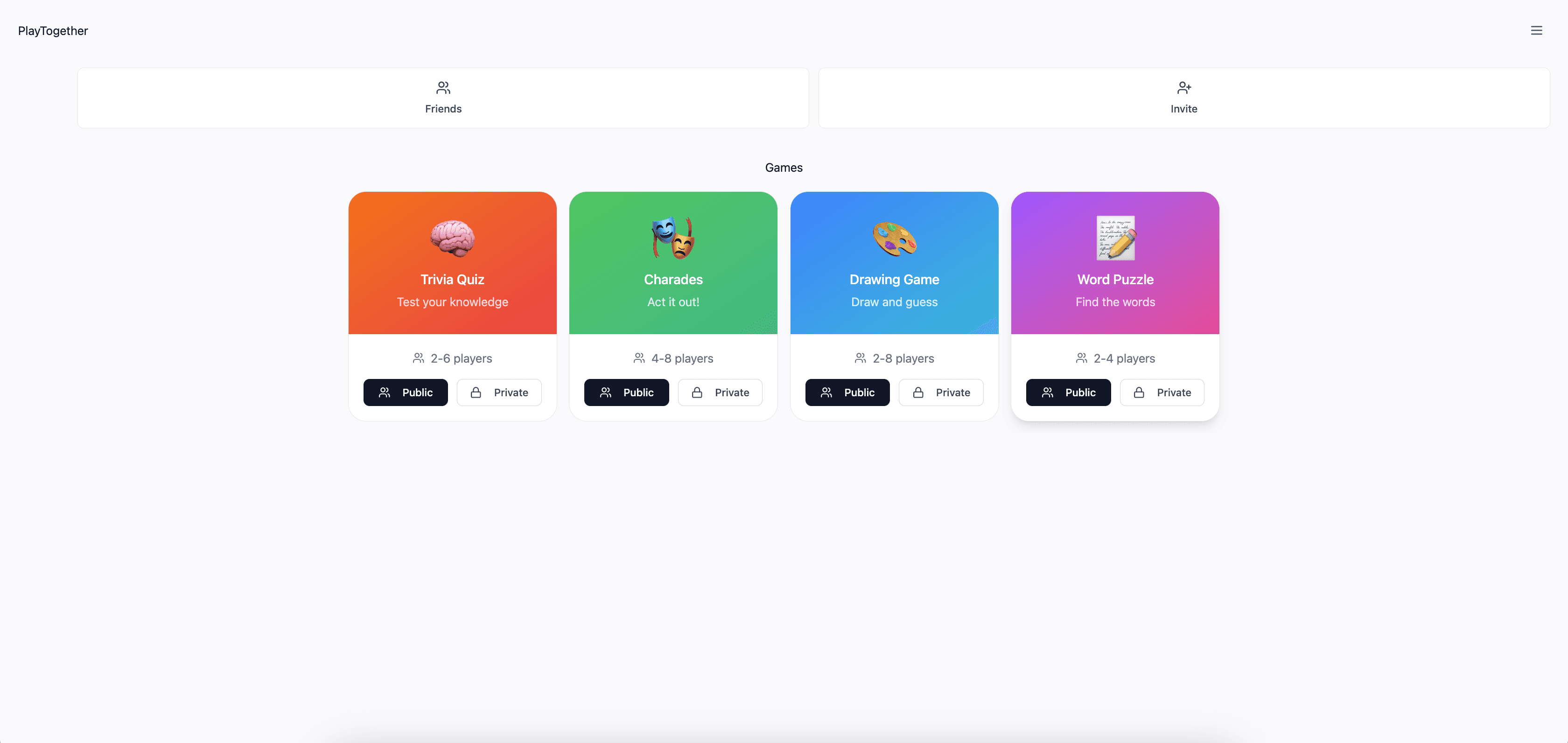
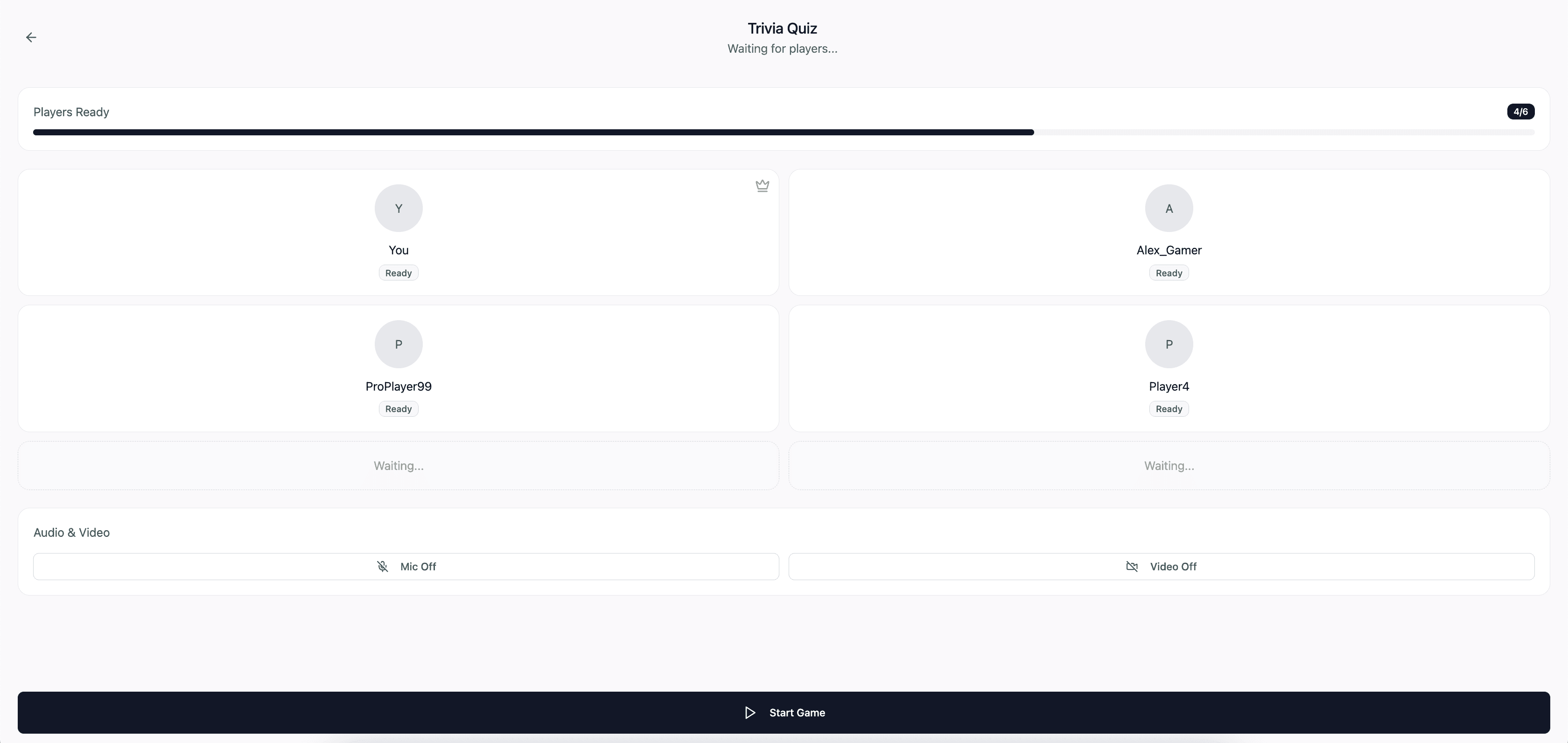
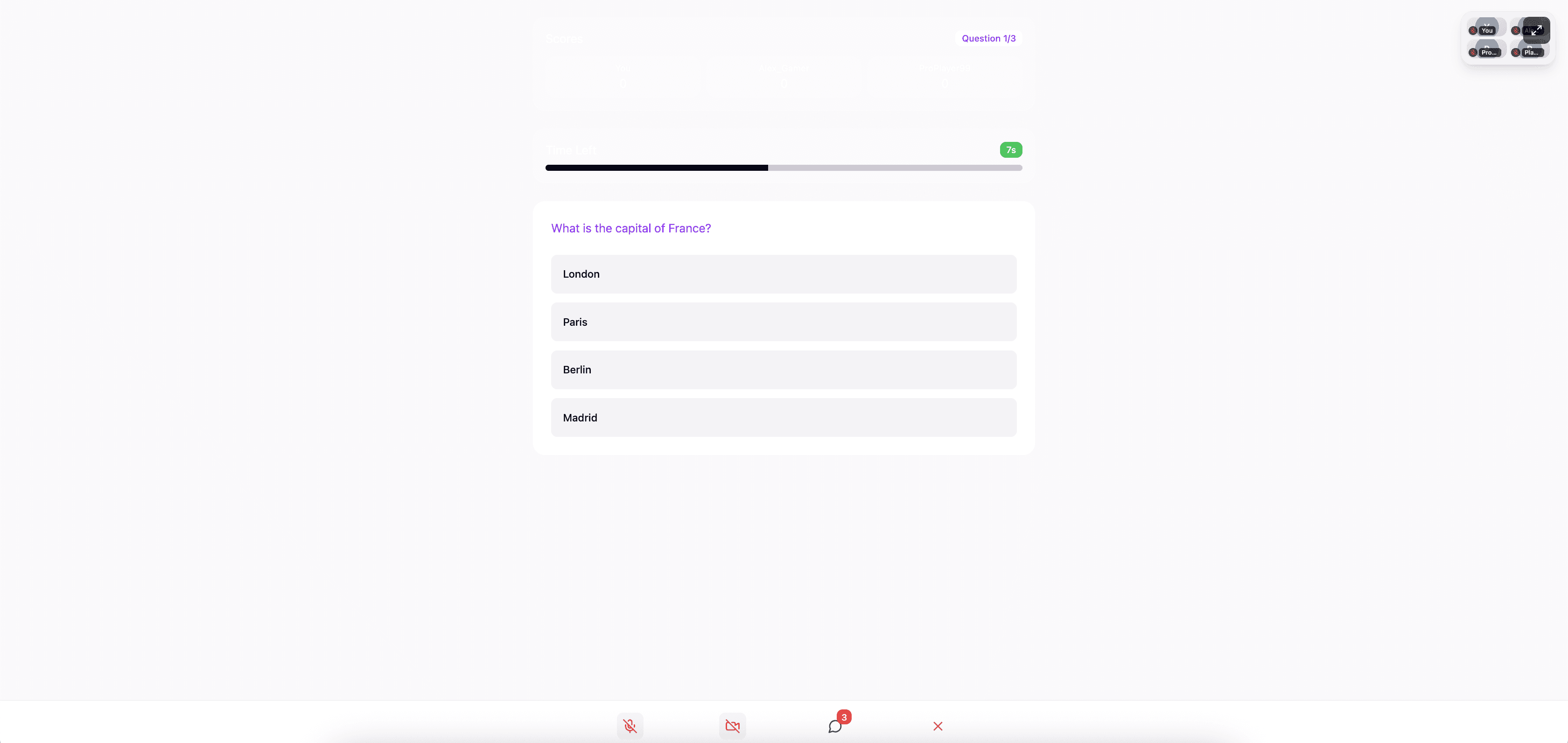
Internal walk-through finding: Once we role-played through the mid-fi prototype as Rose and Daniel, it became clear that the game mechanics dominated the screen, player faces were reduced to thumbnails. There was no huddle mechanic, no drop-in/out flow, and sessions ended abruptly. These became the core fixes driving our final prototype.
4
The Core Feature: Communication as the Heart
Every design decision came back to one principle: chatting and audio/video presence aren’t features, they’re the product. Games are just the reason people show up. The social layer is why they stay.

Group Chat + 1:1 Private Messaging, Always In View
The game view keeps a persistent chat panel on the left. Players can talk to everyone in the group, or slide into a private 1:1 conversation with any player without leaving the game. No separate app. No new window. The conversation never stops.
Group chat
1:1 private messaging
Always visible in-game
Real-time, zero friction


Integrated Audio & Video: See Your Friends While You Play.
Video tiles are anchored around the game table so you can always see who's reacting. Audio is live throughout the session. A dice roll lands and you hear the group gasp, laugh, or groan, exactly like being in the same room. Players can mute, toggle video, and use emoji reactions without breaking the game flow.
Live video tiles
In-game audio
Emoji reactions
Mute / toggle controls
Spatial presence
The video section (bottom left) shows all four players in live tiles. The mic and camera toggle buttons are always visible at the bottom. The design deliberately keeps faces prominent, not buried in a corner, because we learned from research that reading expressions is what makes the game feel alive.
How the Communication Layer Fits Together
Group Chat
Always-visible chat panel on the left. Everyone in the room can send messages, share reactions, and keep side-conversation alive even during the game. Conversations from multiple threads (Trivia Quiz, BlueRGaming, etc.) are visible in chat history.
1:1 Private Messaging
Any player can open a private message thread with another player directly from the chat panel, without leaving the game. This replaced the habit of users switching to Discord DMs mid-session to strategize.
Live Audio
Always-on voice in the game room. Mute/unmute with a single tap. Players can hear laughter, gasps, and reactions in real time, the missing ingredient that made online play feel mechanical before.
Live Video Tiles
Player video tiles appear in the bottom-left panel throughout gameplay. Faces stay visible. Expressions are readable. The "Your Turn" tag and player scores (right panel) are always co-located with player identity.
5
Evaluation
We ran a two-phase evaluation: think-aloud sessions with target users, followed by a structured expert review with four HCI practitioners. I conducted think-aloud sessions and analyzed patterns from the expert evaluation error matrix. I contributed to the post-evaluation interview synthesis.
What Users Said in Think-Alouds
Chat and reactions felt immediately social
The emoji/reaction button was recognized immediately. Participants described the chat panel as "the most social part of the experience", confirming our hypothesis that communication visibility drives perceived togetherness.
Room code / invite was buried
Users expected to find the room code on the home screen. It only appeared inside the lobby invite panel. Caused confusion and momentary loss of trust in the flow.
Turn-taking feedback was the biggest breakdown
The "Roll Dice" button appeared disabled while the dice animation ran continuously. Players couldn't tell if the game had started, whose turn it was, or what to do next. Rated "High severity" by all four experts.
What Experts Found
Issue: High Severity
No persistent feedback after rolling dice. Players couldn't tell if their turn was done.
Fix Applied
Persistent "Your Turn" banner + animated board movement + dice button disabled after roll.
Issue: Medium Severity
Game thumbnails showed no text labels, titles only visible on hover.
Fix Applied
Persistent title text below each game card. Tooltip added for accessibility.
Issue: Medium Severity
Audio/video icon labels ambiguous, unclear if muting self or others.
Fix Applied
Microcopy added ("Mute your mic", "Turn off camera") with brief onboarding hint on first entry.
Issue: Medium Severity
Audio/video icon labels ambiguous, unclear if muting self or others.
Fix Applied
Microcopy added ("Mute your mic", "Turn off camera") with brief onboarding hint on first entry.
Critical gap confirmed by both groups: Without visible turn cues, players hesitate and disengage. This is the single highest-impact issue for a communication-first game platform, because when the game stalls, conversation stops too.
6
Outcomes & Reflection
Evaluation confirmed that when the communication layer works, PlayTogether genuinely feels different from existing tools. Experts noted that seeing friends’ expressions alongside the game board “created a feeling similar to sharing a table”, exactly what we set out to do.
5 Things I'd Take to My Next Project
Communication is the product, not a feature. In social experiences, how people talk and react to each other matters more than the mechanics. Design for the conversation first.
Visibility at critical moments is non-negotiable. Whose turn is it? Did my action work? If these questions have no clear answer, users disengage, and one confused player breaks the flow for everyone in the game.
One-click entry is a design value, not just a convenience. Reducing setup friction isn't about laziness, it's about protecting the social mood. Every extra step is a moment for someone to drop off.
Paper prototypes for socially nuanced flows are worth it. Huddles, drop-in/out, end-of-session afterglow, these couldn't be validated in a Figma clickthrough. The human moment needed low-fi exploration first.
Simplicity vs. richness is an ongoing negotiation. Every feature added risks reintroducing the clutter we were trying to eliminate. Ruthless prioritization is part of every design decision.
What Would Come Next
Explicit step-by-step turn indicators, persist until the action is confirmed complete.
Auto-enable video on join (with consent prompt), faces visible by default, not opt-in.
Afterglow flow, confetti, scoreboard, open-ended "hang out" mode before the session closes.
Low-bandwidth mode, maintain social presence even on slower connections.
Culturally sensitive avatar and reaction system, expand beyond Western expressions.
Broader game library, more cooperative, casual titles with built-in tutorials.